

Louis Vuitton in Formula 1: From Trophy Trunks to Monaco’s Most Symbolic Race
How Craft, Speed, and Legacy Finally Aligned…
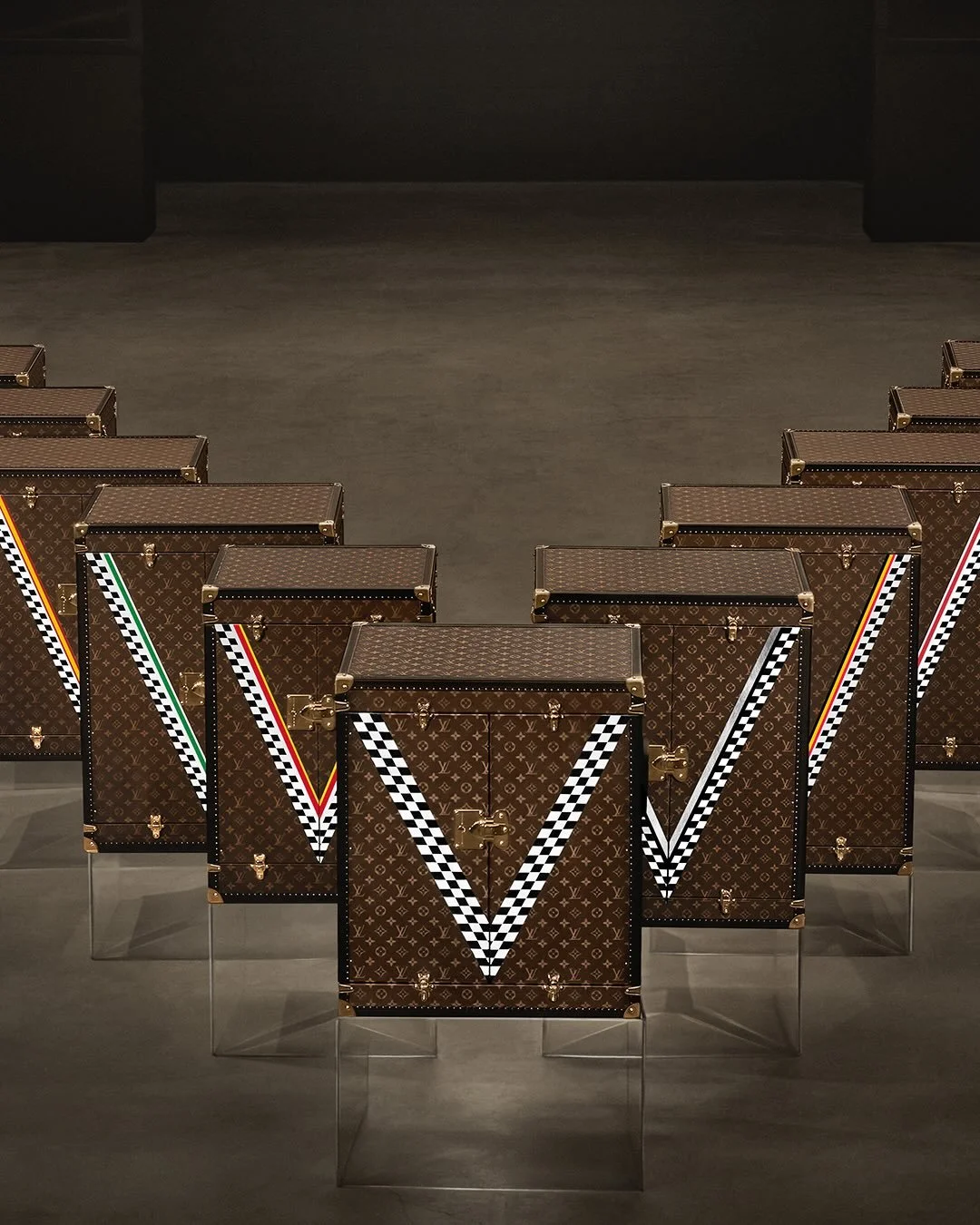
Victory Travels in Louis Vuitton from @louisvuitton official instagram
For decades, Formula 1 and luxury have moved in parallel worlds.
One defined by speed, precision, and performance.
The other by heritage, craftsmanship, and symbolism.
In 2025, those two worlds didn’t just collide — they aligned.
Louis Vuitton’s entry into Formula 1 marked a turning point in how the sport positions itself culturally, and how luxury brands choose to show up in global sport. And with Louis Vuitton announced as Title Partner of the Formula 1 Monaco Grand Prix from 2026, that alignment now feels complete.
This isn’t just another sponsorship.
It’s a long-term statement about what modern Formula 1 represents — and where it’s going next.
Why Louis Vuitton Makes Sense in Formula 1
Luxury has always existed around Formula 1, but rarely within it.
For years, partnerships leaned heavily on visibility — logos, timing boards, repeated exposure. Louis Vuitton approached Formula 1 differently. Instead of asking how often the brand could appear, they asked what moments actually matter.
Formula 1 isn’t just about lap times or overtakes.
It’s about journeys. Championships earned over seasons. Careers defined by precision under pressure. Travel that spans continents. And moments that turn into legacy.
Those values are deeply embedded in Louis Vuitton’s DNA.
When Louis Vuitton became an Official Partner of Formula 1 in 2025, the goal was never to dominate the sport visually. It was to translate it culturally.
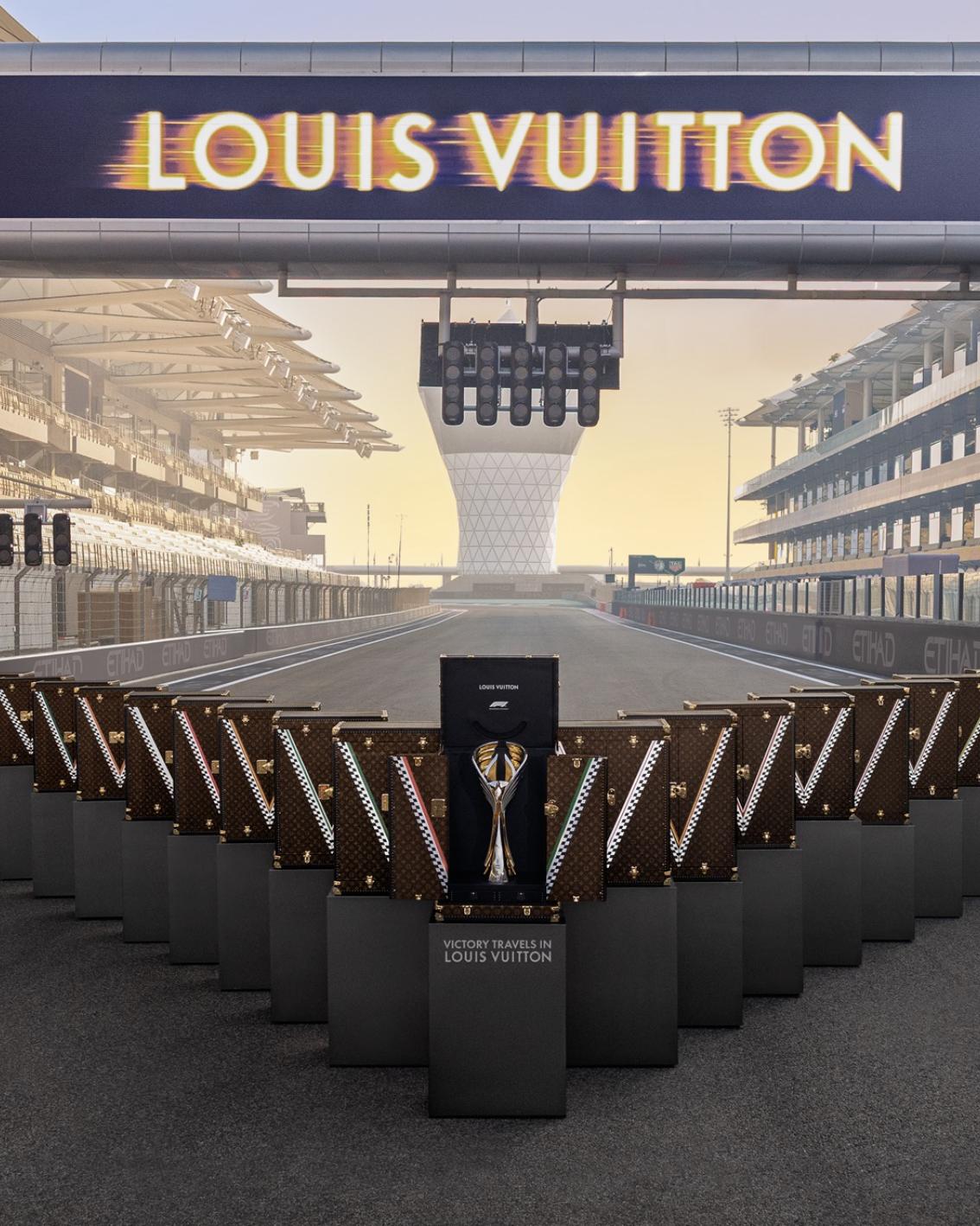
The official Abu Dhabi Formula 1 Louis Vuitton Trophy Trunk, joined by 23 preceding cases in an eblemative V at the Abu Dhabi Grand Prix in Yas Marina
“Victory Travels in Louis Vuitton”: Turning Triumph Into Legacy
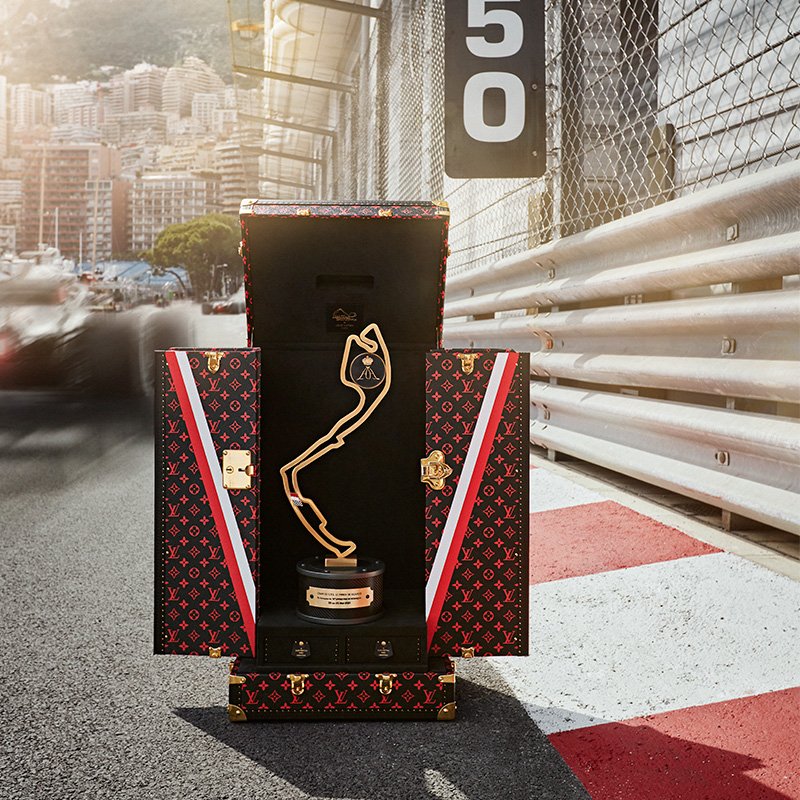
One of the most powerful creative decisions Louis Vuitton made was deceptively simple: the trophy trunks.
Throughout the 2025 season, race-winning trophies and championship cups were presented in custom-crafted Louis Vuitton trunks — handcrafted in the Maison’s historic Asnières atelier, where the brand has been creating travel pieces since the 19th century.
Each trunk wasn’t just a container.
It was a symbol.
By encasing trophies in these trunks, Louis Vuitton reframed victory itself — not as a fleeting moment, but as something that travels, accumulates meaning, and becomes part of a larger story.
The phrase “Victory travels in Louis Vuitton” stopped being a slogan and became literal.
And nowhere was that more poetic than at the Abu Dhabi season finale, where the trunks were lined up on track in a striking V-formation — a visual full stop to a year defined by pursuit, pressure, and payoff.
Filling Big Shoes After Rolex — And Doing It Well
Louis Vuitton had big shoes to fill.
Replacing Rolex — a brand synonymous with Formula 1 for years — was never going to be easy. Rolex represented tradition and timekeeping. Louis Vuitton had to introduce something new without disrupting the sport’s rhythm.
Instead of competing on the same terms, Louis Vuitton changed the language.
They adapted their visual identity to reflect speed and motion, introduced a distinctive purple trackside presence that stood out without overwhelming, and focused on storytelling rather than saturation.
It wasn’t about being everywhere.
It was about being meaningful where it mattered.
Looking back on their first full season in Formula 1, it’s clear Louis Vuitton didn’t just step into the sport — they elevated its visual and emotional vocabulary.
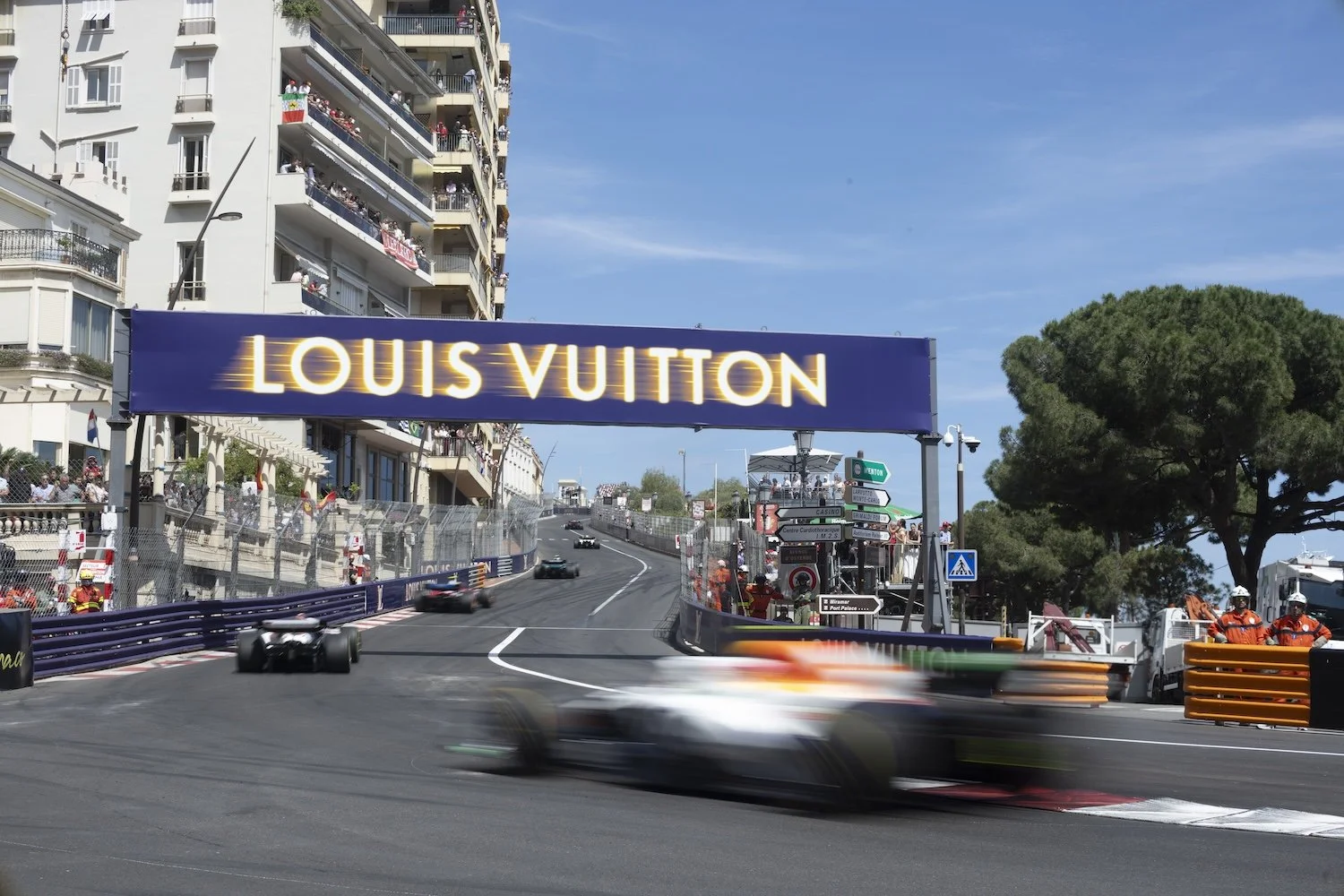
Louis Vuitton’s purple trackside branding adapted for speed.
Monaco: The Most Strategic Move of All
You can’t talk about Formula 1 without talking about Monaco.
The Monaco Grand Prix isn’t the fastest race on the calendar. It’s not the most unpredictable. But it is the most symbolic.
Monaco is where Formula 1 proves what it stands for:
heritage, precision, exclusivity, and proximity to power.
So when Louis Vuitton was announced as Title Partner of the Formula 1 Grand Prix de Monaco from 2026, it didn’t feel like a surprise — it felt like a conclusion.
By taking over the title partnership from TAG Heuer, Louis Vuitton isn’t just sponsoring a race. They’re aligning with the single event that best represents Formula 1 as a cultural institution.
This move says something important:
Louis Vuitton doesn’t need to own every weekend.
They chose the one that defines the sport.
Craft Meets Motorsport: A Shared Obsession With Precision
One of the most compelling parallels Louis Vuitton has drawn throughout its Formula 1 partnership is between pit crews and artisans.
Both operate under immense pressure.
Both rely on repetition, teamwork, and mastery of detail.
Both know that one small mistake can define the outcome.
Louis Vuitton’s end-of-season film, Quest for Victory, captured this beautifully — not by glorifying the trophies, but by focusing on the process behind earning them.
That’s where this partnership truly lives: not in the spectacle, but in the discipline behind it.
What This Means for Formula 1’s Future
Formula 1 today isn’t just a sport.
It’s a global cultural platform.
Fans don’t only follow races — they follow stories, aesthetics, travel, personalities, and the worlds that exist around the track. Louis Vuitton understands this shift deeply.
By entering Formula 1 with intention rather than excess, Louis Vuitton has helped push the sport into a more nuanced luxury era — one that values narrative as much as numbers.
And Monaco 2026 will likely be the clearest expression of that vision yet.
Why I’ve Been Watching This Closely
One of the very first videos I posted when I started The Grand Prix Life was about luxury entering Formula 1 — specifically Louis Vuitton’s move into the sport and what it signaled for the future.
What drew me in wasn’t the logo placement.
It was the strategy.
From the trophy trunks, to the visual language trackside, to choosing storytelling over noise — Louis Vuitton’s Formula 1 presence has been a case study in how luxury can exist within sport without diluting either.
Monaco 2026 isn’t a pivot.
It’s the logical next chapter.
Final Thoughts
Formula 1 didn’t just gain a sponsor when Louis Vuitton entered the paddock.
It gained a cultural translator — a brand that understands that modern Formula 1 isn’t only about speed, but about design, travel, heritage, and the moments that turn race weekends into global stories.
That intersection — between performance and meaning — is exactly where Formula 1 is headed.
And it’s exactly where The Grand Prix Life exists.